Showing posts with label Student Nurse. Show all posts

Thursday, 6 August 2015

Metal Nurse Spaketh: Critical Thinking


Critical thinking. It’s an important aspect of life and living. If there is one lesson I learnt in uni was that critical thinking was probably the most essential part of becoming a nurse (Yes, people will say care and compassion are more important, but care and compassion can be done wrong if done without critical thinking). It is also the reason why it’s a three year course. That might seem like overkill, but just look at how long doctors have to train and thank your lucky stars.

My personal tutor always made a point of it when we talked about evidence and the use of it in good care.  It is one of the many reasons how student nurses become nurses. One of the biggest parts of their studies is how to critically evaluate the evidence, the research and how to critically appraise it. It is to learn how to distinguish between a bad study (that can hinder your care for someone, for example The Wakefield study) and a good study, as in a study that can, will and does positively impact on your patient group.

In our profession we have to deal with a plethora of different medical professionals, some of course more difficult than others. Because of this we have to learn how to think critically and also make sure that our evidence based practice is up to snuff. This does not mean that we know better, we don’t (always), it means that we should know when to ask the right questions, and also when to accept the answers. But with that, we should always make sure that we follow up on those questions and if we feel that we do know better we should be able to say so and back it up. This is why nursing education is so broad and this is why as a profession we are encouraged to adopt life-long learning, it does nobody any good if you just decide that you want to stay in your present role until you retire. That is not a good enough reason to stop learning. Even if you stay as a Band 5 throughout your career you still have to learn how to move with the times.


As nurses we shouldn't just do stuff, we shouldn't just carry out tasks without thinking WHY we are carrying out those tasks. Which is why there is always a big push for evidence based practice. It doesn't just apply to doctors, it also applies to nurses. We are not there to be at the beck and call for doctors, we are there also to work as safety nets for our patients. We are there to make sure that our patients get the best care and that does not only apply to regarding personal care. It also applies to the medical treatment they get. Since doctors cannot be there all the time, we have to be their surveillance system. Seeing as the doctors care of patient  is so dependent on the reports they get from the nurses. But along with that we also should be able to work with enough autonomy and knowledge, in case something needs to be done there and then.

And this is why it boils my piss when I come across nurses who should know better. There are way too many nurses (minority, yes, but still too many) who seem to follow trends and not the evidence. When I hear nurses spout of stupid stuff like “MMR vaccine causes Autism” or “80% of the immune system is in the gut”, “I’ve never had the flu, so why should I bother with the vaccine”. Or use words like “toxins”, “detoxify” or “chemicals” without proper context. Or dabble in homeopathy. Or claim that organic is better. Or read the Daily Mail for health advice. (Don’t get me started on the diet talk)

We should know better and the fact that I know nurses who do and have said stuff like that makes me a little sad.  We have come a long way from being essentially doctors handmaidens. We are not just the task-oriented workers of yore (Though, you’d be hard pressed to believe that when you meet some of us). But sometimes it feels like we are still battling through those days.

Just in case people get the wrong idea, I am not saying that us nurses (Just me) should be all knowing and perfect in everything they do. It would be nice, but it is never going to happen. What I am asking is that nurses take their time in following the evidence up. If they read an article that says somewhere “A recent study...” then please before quoting the article, see if the study is actually referenced and if it is, to actually read the study in order to confirm that the article represented that study well or completely misled the reader. If they have that niggling doubt to make sure that they follow up on that. Be skeptical, but do not deny. Accept the answers when the evidence is overwhelming.

Good evidence trumps anecdote and intuition. A nurse who works with good evidence in conjunction with finely honed intuition that has been developed over the years is even better. But in the meantime, while the nurse is getting that experience it helps to learn critical thinking.

The most important lesson every student nurse can learn is that there is always more to learn and that your knowledge base can always be broadened, widened and stretched.   Or in the words of Neil DeGrasse Tyson:


Wednesday, 21 January 2015

Student Nurse Perspective: Stroke Care


Seeing as my first job as a qualified nurse is going to be on a stroke unit. I thought for my own sake that I write a little about strokes. With that I thought I'd tie in with a little bit of information about thrombolysis. Mostly I am writing this as a refresher for myself and at the moment this looks like to be my last Student Nurse Perspective article. Due to be renamed Icelandic Metal Nurse. But I do hope that it will be useful for others as well, I will try my best to write it in such a way that everyone can read it and understand it (well, hopefully).

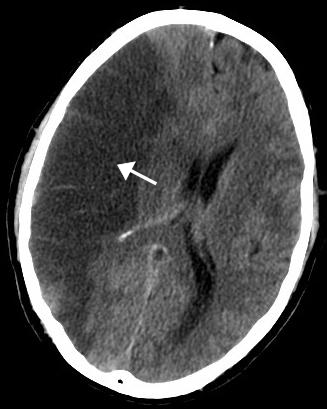
Haemorrhagic Stroke
Stroke (Apparently called Brain Attack in the US) is the common name for Cerebrovascular Accident (CVA). Every year around 100,000 strokes occur in the UK. It mostly occurs in people who are over 65. But it can affect everyone. It is a very debilitating condition and depending on which area of the brain it happens the symptoms vary. Mostly the effects are irreversible. Symptoms vary between what part of the brain is affected, and the larger the stroke the more areas of cognitive ability it will affect. Stroke accounts for over 46,000 deaths per year making it the third largest cause of deaths in the UK and it is the most common cause of adult disability.  There are big financial implications for society as a whole, total costs to the NHS is over £4.4 billion per year and to society due to lost income and informal care it is £9 billion.

Survival rates from a stroke is currently 20-30% after one month and 30-40% after one year, but those numbers do not mean a lot to the individual. Generally in terms of better prognosis is based on severity of the stroke, age of the patient, what type of stroke, ethnicity and co-morbidities. Physical recovery is based on how much function the patient has in terms of activities of daily living and it usually reaches it's peak six months post stroke.  Whilst we have come a long way in treating acute strokes and hospital rehabilitation for stroke patients, we have not progressed very well in terms of long term management and community based treatment for stroke patients who suffer from some of the more long term affects of strokes like psychological and social problems.

Ischaemic Stroke
Strokes fall into two categories, ischaemic strokes and haemorrhagic strokes. Ischaemic strokes accounts for 85-90% of all strokes. Ischaemic stroke occurs when there is a blood clot occluding any blood flow to a portion of the brain. Haemorrhagic stroke is when an artery in the brain has burst and blood leaks into the brain tissue. Haemorrhagic stroke can also be further divided into Intracerebral haemorrhage (bleeding in the brain tissue) and subarachnoid haemorrhage (bleeding on the surface of the brain). There are also some conditions that are sometimes known as stroke mimics, for example hypoglycaemia, epileptic seizures, severe migraine attack, encephalopathy and Transient Ischaemic Attacks. There are certain lifestyle factors that increase your risk of having a stroke such as smoking, alcohol consumption, poor diet, lack of exercise, obesity and drug use. There are also certain medical conditions that will raise that risk such as  high cholesterol, high blood pressure, atherosclerosis, diabetes and atrial fibrillation.
  • There are of course plenty of actions you can take to reduce your risk of getting a stroke. If you are a smoker then there is nothing better you could do than to quit smoking. I mean seriously. Just stop. Now. That stuff is bad for you.
  • Reduce your alcohol consumption. Those cans/wine glasses add up, especially when you are pairing gluten free German beer with French wine as smorgaswine.
  • Lay of those drugs. Or at least reduce your usage drastically. Please.
  • Pick up regular exercise. It doesn't have to be anything major. Just get of that sofa and go for a nice brisk 30-45 minute walk every day. Get a dog or failing that get a ferret.
  • Increase your intake of fruit and vegetables. The importance of a good diet cannot be underestimated. Sure go for the occasional fast food, but don't forget to include some salad with it.
  • Lose some weight. No I am not saying that you have to look like a sculptured Greek god/dess. I am saying that that apron you have around your waist needs to go.
  • If you're diabetic make sure that you keep your blood sugar ticking between 4-10 mmol/l. Fluctuating blood sugar can be a little disastrous. 

F.A.S.T.
Thankfully due to the excellent FAST campaign most people know what signs to look out for if someone is having a stroke. But I'll go over it briefly again just to recap. When stroke begins the symptoms are pretty quick to show, first thing to notice will be if the face is drooping to one side (can they smile), if they can raise both arms and keep them raised for say 10 seconds or so and if their speech is slurred. Time is of essence here so if you suspect that a loved one is having a stroke phone the emergency services as soon as possible (999, 112 or 911, depending on your location). While there are lots more signs and symptoms those are the ones you should look out for. Symptoms also vary depending on where the damage is happening in the brain, if the symptoms are visible on the right side of the body then the left side of the brain is affected and vice versa.

Carotid Artery
If you've been found to be in a particular risk group then your doctor might decide to put you on some medications in order to reduce that risk. This is mostly medication based using drugs like statins, these are used to control and lower your cholesterol. Anti-platelet, such as aspirin or clopidogrel, are also per standard. These work by inhibiting platelets forming clots. Quite possibly the most important one, or possibly the most well known, you will also be prescribed a tablet from the anti-coagulation group, most likely Warfarin. Like the anti-platelets these work by reducing clot forming usually by inhibiting vitamin k production. As far as side effects are concerned there is the risk of bleeding. If you were diagnosed with high blood pressure you would also be put on either beta blockers or ACE inhibitors.  All of these drugs would also be used as a secondary prevention. If you had suffered from Transient Ischaemic Attacks your doctor might suggest that you have what is called Carotid Endarterectomy, this procedure is used to remove plaque from the carotid arteries. If this procedure is done in a timely manner post TIA's then lives can be saved and strokes averted. Not only that it is also sometimes a suggested operation to prevent another stroke from occurring and again time is of the essence. The sooner this operation is done the better outcome there is for the patient.

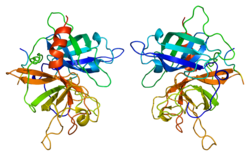
Recombinant Tissue
Plasminogen Activator
If ischaemic stroke is caught soon enough and time of onset is known then this type of stroke can be partially reversed or at least contained using a medical treatment called Thrombolysis. The alternative name for it is Alteplase and this is made from recombinant tissue plasminogen activator. It is biotechnology at its finest. This treatment is a bit of a controversial one, mainly due to the perceived ineffectiveness, the risk and the price.  About 1 in 7 actually benefits from it and there is the danger that it might turn an ischaemic stroke into a haemorrhagic one. In order to qualify for the procedure you have to have a CT/MRI scan to confirm what kind of stroke you have had. The time of onset has to be known and has to be within 4 hours, though the treatment is said to work better if it is within 3 hours. And the patient has to be weighed. If it has gone over 4 and half hours then you are in danger of damaging the brain even further. When it is effective then it is very effective, a study found that after three months from treatment around 30% of patients were back to normal or at least near normal neurologically and a further 30% had mild to moderate neurological deficit. Up to 50% had become independent in activities of daily living and 15% were moderately independent. But on the other side of things it also found that it up to 9% of patients who had received this treatment had died due to intracranial haemorrhage.

So in conclusion. Regarding strokes time, is of the essence so if you suspect that a loved one (or a stranger for that matter) is having a stroke get your phone out. Don't waste your time taking pictures, and phone for the emergency services. But it isn't just important to get them into the hospital for treatment it is also important to make sure that they end up in a specialist stroke unit as their chances of recovery are much better on there than on a general medical ward. The multi-disciplinary team on there should be made up from (besides nurses) Occupational Therapists, physiotherapists, Clinical Stroke Specialist Nurse, medical consultant and a registrar. Ideally after the hospital stay there should be an outreach team to assist with activities of daily living and further rehabilitation.

Thursday, 9 October 2014

Statement.

Just in case I hadn't made it clear and to shed some light on my thinking process. Education is a wonderful thing. Not really that many years ago I used to be a fairly big believer in herbal medicine, I had actually seriously considered studying herbal medicine, that organic food was better, and a fence-sitter regarding vaccines.

Obviously as most of you will have noticed my stance on those things have changed. And changed for the better. The things that changed it were a culmination of a lot or things, firstly my duaghyer when she was very very young developed bronchioloitis but for a while me and my partner were convinced that she had whopping cough(truthfully I still think that might have been the case, but the GP hadn't seen a case of whopping cough for 10 years. Let that sink in a little) and as I started my course I started meeting more Polio survivors, all 70+ years of age.

At its finest modern medicine is based on herbal medicine, the difference is that the volatile compounds have been isolated, purified and made more potent. The rest of herbal medicine just tastes nice on chicken.

As for opposing GM technology, well that has got to be the most self centred, first world problem that I can think of. To oppose technology that creates drought resistant and pest resistant seeds that will create more food, with more nutrients, not just for the booming population of the first world (be grateful that you can waste money on organic) but also the starving population of the third world is, as stated before, self centred and selfish. Oh and if you oppose GM technology then you are wishing death on insulin dependent diabetics. And Haemophiliacs.

So here's the rub. In the next six months I will (grading pending of course) qualify as a nurse. And I will be using evidence based practice. And if some idiot then tries to convince a patient of mine that chemo is useless, that vaccines cause more problems then they solve, if they just generally advocate the use of untested, unproven and dangerous treatments instead of proven, effective safe treatments, they will feel my shoe firmly lodged into their posterior.

If you want to use these methods fine. I can live with that, but don't you fucking dare get in the way of me doing the best for my patients. And not just for my patients but the community as a whole.

This might all come across as close minded, but it is anything but. I have been willing to look at the evidence and the evidence changed my mind. Being open minded is what evidence based science is all about.

Monday, 30 June 2014

A whole year of blogging.

Well today is a special day. For me that is. Maybe other people, but mainly me. This blog has been going on for a whole year now. It started of as just some rambling about music on Facebook, in the form of Facebook Notes. I had already written a few notes and wanted to expand it a little bit so decided to revisit Blogger and make a new account. I had already used blogger for my now defunct Judas Disciple and Mind of the Buddha. My very first entry was my defence of Sepultura's Roorback. Mainly I had just concentrated on writing about music, because I really really like listening to music. I didn't really expect to reach a big audience, this has purely been for my own satisfaction. Well... sometimes it does feel good when you receive nice feedback, it was especially nice when Queensryche shared my blog about them and all of the sudden I had this massive surge of like-minded Queensryche fans. Which I had never seen before. As most people will have noticed (and quite a few have commented on) I do have the tendency to write about heavy metal music. But from time to time I have also written about something completely different like Baby Dee, Jon Lord and Bill Hicks. Often I try to write about rather obscure bands that, in my mind, deserve a lot more attention. Bands like Xanthochroid, Thy Catafalque, and Blaze Bayley.

Then one day I came across this stupid meme shard by 9Gag on Facebook. About how people who are bullied should stop whining, or some kind of stupid shit like that and it pissed me off and then I got an apology message from an unexpected source. So I decided to write about my experience of being bullied at school. It was one of the most shared blogs I had written up to that point and I felt like a load had been lifted off my shoulders, again. Then I returned to writing about music. Shortly after I received a message from Throwdown Syndicate asking me if I fancied writing about them, something completely new to me. So I did. Then I started getting itchy palms about writing something else. One day while cycling I started noticing how many cyclists weren't using helmets, the following day I counted how many cyclists and how many of them were using helmets. It pissed me off so much that I decided to hit Google Scholar and Quest, thanks to me being in a university I was able to read even more studies. This was the result. This was followed up with a, uhhh, follow up to my bullying blog talking about the social impact and the social price we all pay for bullying.

I had been an avid reader of the Skeptical Raptor and other science-y debunk sites and wanted to get in on the game. Then after a little while I wrote a blog about the Flu Vaccine, which in turn got changed to Student Nurse Perspective entries. Then Mr Skeptical Raptor asked if he could reblog it, which I would have been a fool to say no to. Since then I've written about IT in healthcare, importance of education, being male and GMO's. These have been the most satisfying to write because I always feel like I've learned something after I've written them, and this series has also been my most successful one in terms of views. If there is one thing I will miss when I qualify it's the University's journal database. Sure I can probably still read the books, but I won't be able to access the database.

I still write mostly about music. But on the whole this blog has become my platform to vent out. I still use it to develop my writing skills. And I still publish on a very regular sporadic basis. I've tried to make money out of, but I don't think I'll ever be able to make a living out of it. Currently my income from this blog stands at 55 pence. As it stands I have had 11123 pageviews, which in the grand scheme of things isn't much, but in my little bubble it is a fairly considerable amount. This is the third month in a row where I get more then 1000 views. Which is fairly considerable for considering that at one point I was struggling to get over 200.

Thanks to the blog I have also come across some wonderful people, some who I'd tentatively probably call friends. I have no idea if I've got some regular readers, if I do. Please leave a comment... or not if you don't want to.

But on the whole, thanks for reading.

Yours Truly,
Ingvar Arni Ingvarsson.

Saturday, 31 May 2014

Student Nurse Perspective: GM technology in Health

Not sure how to quite start this, maybe with a little background again. For some time I had been involved in the alternative lifestyle. I had never really put much thought into GMO technology because it seemed so out of my knowledgesphere. I had heard the phrase Frankenfoods, I had vaguely heard of a company called Monsanto. But on the whole not much. I was told that I should avoid GM foods. It never really struck me as something that important. Now since I started my nursing education I have been taking care a lot of people with diabetes and have to use insulin. Again it wasn’t something I had thought much about until someone pointed out to me that human insulin is made using GM technology. Since throwing my weight behind the pro-gmo camp I have found it amazing that people are so against this technology; even people who work in healthcare who either just want to remain ignorant or just are ignorant of it’s value. I find this technology amazing! Not only is going to save lives, it already has.

For the record, I am not a biologist, but I’d like to think that I’ve got a rudimentary knowledge of it. Which is why I tend to check up with sites like Sense About Science, Genetic Literacy Project and Skeptical Raptor. I do not reference in any kind of organized way but I do provide as many links as possible where I feel it is needed... and sometimes where it isn’t needed.


Left: Child on starvation diet
Right: Same child after getting insulin
Diabetes mellitus (DM) type 1 and 2 are diseases that affect a persons ability to regulate their blood glucose levels. Both diseases are characterized by chronic high blood sugar. If left unregulated, high blood sugar can lead to acute diabetic ketoacidosis and death with long term complications of kidney failure, heart disease and blindness. DM type 1 and 2 are frightening illnesses, that depending on how you think of it, we have only fairly recently been able to get control of. The key word being control because we still have not found a cure for either, only management strategies.


Historically, DM is not a new disease There have been references to both types of DM in ancient Egyptian manuscripts and the name diabetes was coined by Ancient Greeks. In India they had already divided DM into two types; if you were “lucky” enough to receive a diagnosis you might survive for a further 1.4 years, but more often than not you would die within months if not weeks. The standard treatment at the time was starvation, which remained the standard treatment for type 1 DM until the discovery of insulin.


Insulin was discovered in the 1920's by Dr. Frederick Banting, who experimented on hundreds of dogs. It had been previously known that DM had something to do with the pancreas, but the association with the disease was still undiscovered. Dr. Banting's dog experiment established that dogs without their pancreas would develop diabetes; their blood sugars would shoot up and they’d get hungry and thirsty. All of that subsided when they were injected with ground up pancreas. Dr. Banting's would go onto discover that it was a substance called insulin that is created by the beta cells that are located in the Islets of Langerhans in the pancreas that regulates the blood sugar. After extensive experimentation, it was decided to try injecting insulin into a person, a 14 year old boy who was at deaths door before being given the first insulin injection. He went on to live live for a further 13 years.


The history of insulin is quite fascinating. It was the first protein that was completely sequenced in the 50’s. Up until the 1980’s, we were using bovine and porcine insulin; meaning that we were essentially harvesting insulin from the slaughtered leftovers of cows and pigs. While insulin from animal sources saved a lot of lives, there were major drawbacks with allergic reactions, not to mention that bovine and porcine insulin are not human insulin and there was not such thing as "control". Something had to be done to find a supply of insulin that was reliable and continuous. Researchers in the 1960's had been able to synthesize some insulin, but not enough to satisfy demand. That all changed in the 70’s when a company called Genentech started working with City of Hope Research Institute to combine human insulin gene into a bacteria in order to create insulin. Following extensive testing and refining, it was released for the general public in the 1980’s. I’ll try and explain the process of GE human insulin as simply as possible.


To make human insulin the pharmaceutical companies use a Recombinant DNA Technology, they insert insulin gene into a bacteria called E.Coli, though some manufacturers use yeast. As stated before insulin is a protein, it is composed of 51 amino acids, that are separated into A Chain with 21 amino acids and B chain with 30. A and B chain are synthesized separately. The bacteria with their new gene are allowed to ferment and thus multiply. After sufficient amount of time they are then taken out of their fermenting tanks and broken up, with the insulin protein chains extracted. The two strains are then combined with a disulfide bond. Then when all of that is done, the whole mixture is purified even further so all we end up with is a big batch of insulin. Then thereafter they add other ingredients to the mix in order to prevent bacterial contamination, to create a neutral base and to create intermediate to long-acting insulin.

There will be steps that I have missed, but in a nutshell that is how it is done. So yeah insulin. GMO. And since its discovery it has saved millions of lives that otherwise would not have been possible. Currently, there is some exciting work where insulin is harvested from Safflowers. Which would be cheaper and possibly easier to produce, along with that it could be better suited for inhalable insulin. Again, this is GMO technology at its best.


Spanish Flu killed 50 - 100 million
worldwide
I have already waxed lyrically about the importance of the flu vaccine for health care workers. The flu is a very serious disease at any age, but it is at its most deadly for children under five and the elderly, and of course those who suffer from immunodeficiencies due to assorted reasons. As a healthcare worker I see it as my duty to get the flu vaccine every season. The flu vaccine, unfortunately, is probably the least effective vaccine we have got at the moment. Depending on the season it’s efficacy can vary from 30% - 70%. The way we make the influenza vaccine at the moment is by using eggs. Lots and lots of eggs. And usually it takes between 1 - 2 eggs per dose of vaccine; it’s very laborious and, well, inefficient. There are couple of problems that we face with the any flu vaccine; to make a more effective and universal vaccine it would take around 12-15 years of research to develop and create with a cost somewhere between $500 million to $1 billion. This puts off nearly all of the pharmaceutical companies. Another problem with flu vaccines made from eggs is that people with egg allergies can suffer allergic reactions, hence there are now two different ways of creating a flu vaccine in the works, and one that is still being researched.

The first one is called FluBlok, created by Protein Sciences, which uses a recombinant technology and insect cell cultures to create the vaccines. This is done by injecting a baculovirus into the insect cell culture, which in turns creates a protein that most influenza viruses have called hemagglutunin. This methods uses no other fragments of the flu virus, it contains no traces of adjuvants or antibiotics, and most importantly, no egg. Unfortunately, so far it has been found to be 44% effective.
The second one is called Flucelvax, made by Novartis. Again this is made with cell culture, but this time of mammalian origin. Other than the origins of the cell culture, Flucelvax is made using the same technology as FluBlok . Remarkably, Flucevlax was found to be more effective than FluBlok, 77% effective in fact.

Both rely on Recombinant DNA Technology. It is a technology that cuts up DNA molecules and splices the fragments together in. In other words it is the process taking a DNA fragment from somewhere else and fuse it with another DNA fragment. For example the insulin gene that has been spliced into an E.Coli bacteria.

The third flu vaccine is personally the one that excites me the most. This flu vaccine is made from genetically modified tobacco plants. Finally tobacco plants will be used for something other than to puff into our lungs. The business Medicago is leading the way in this front; for each plant, there is the potential of up to 50 doses of a flu vaccine. The exact details I don’t know and even if I did, I wouldn't be allowed to say. In essence:

“Although the exact process is proprietary, Medicago starts with tobacco plants grown in greenhouses. After about five weeks, the plants are suspended in a solution made from a human-safe bacteria found in soil. That solution in effect tells the tobacco plant to produce large quantities of an influenza viral protein. Once the plants take up that solution, they incubate for about five days.” [Source]


Unfortunately this is still in testing stages, but it would be a great cost-saver as it’s the cheapest way they have found to make a flu vaccine. At least until they find a universal flu vaccine. Medicago has been concentrating on using plants in order to create their vaccines, because it’s a comparatively inexpensive process and produces higher yields. Additionally, a flu vaccine can be made ready within 3 weeks from identifying a seasonal and/or pandemic strain.


These systems all have the advantage that they are not dependent on egg supply and more time can be dedicated towards calculating what flu strains will be most commonly in circulation.

Other medication that uses Recombinant Technology is rhGH. Which is short for recombinant Human Growth Hormone, under the brand name Humatrope. Human Growth Hormone (HGH) is necessary to stimulate cell production, growth and regeneration. It is created in the pituitary gland located in the brain. If there is lack of HGH in children, than the effects are diminished growth, obesity, lack of sexual development and disrupted mental development. There is also the danger of hypoglycaemic episodes. Again, this is where Genentech came in; they inserted the DNA code for HGH into plasmids that were then in turn introduced into our superhero bacteria, E. coli. Prior to this we had to harvest human growth hormones from human cadavers (much like insulin was harvested from slaughtered cows and pigs), and in order to gain at least a years supply you would need up to 50 pituitary glands.


The last Tsar family, Alexis the
youngest had haemophilia.
Then there’s haemophilia. Haemophilia is a genetic condition where blood clotting factors are impaired, causing a person to bleed profusely even with a minor wound. This is usually a genetic disorder where there is a lack of Factor VIII. The most famous example of this is the last Tsar family where Alexis, the youngest son, badly suffered from the condition. Currently, we rely on blood donations in order to treat this, which is all well and good, but we continually run into the problem of lack of donations. Spurred on by worries surrounding the lack of consistent screening of blood, and with the potential of contaminations and antibody formation to donated blood, a group of scientists in 1986 developed a way to create Factor IX. This was done by splicing Factor IX gene into plasmids, that were then inserted into hamster ovary cells along with plasmids that were treated with a gene that was coded for resistance against methotrexate.


These are just a few examples of GE technology in medicine. There are already over 110 medications on the market that are made using biotechnology with more being researched everyday and more than 350 million people feeling the benefits because of it. For example we also have antithrombin III, used to prevent blood clotting during surgery, that we collect from the milk of transgenic goats. There has been some research done regarding a vaccine against Alzheimer's using tomatoes. Organ transplant might not have to rely on organ donors anymore, with research going into making tissue that could be used to make variety of human organs! This technology provides us with the best tools in order to combat diseases that at this moment have no cure. Not only that, with the current problem we are facing regarding antibiotic resistance, biotechnology is being used to fully explore alternatives. Thanks to this technology, we are developing even more cancer treatments, and while the cure might be some time off, at least we can give people more quality years of life. With this we technology we also can stop relying on animal derived products and go towards plant based manufacturing, instead of using CHO cells. It allows us to produce more convenient storage of raw materials at a lower cost and is arguably better for the environment.

Yet out there are people who are against biotechnology, mostly for what seems to be idealistic reasons rather than any actual factual reasons. Most people who are against GMO don’t seem to realize just how useful and prevalent it is, or in fact what it is. They don’t seem to understand that biotechnology has been in use ever since humankind picked up agriculture. Biotechnology in medicine has been used, successfully, for the last 30-odd years! They don’t seem to be able to reconcile that the GMO technology they oppose so much (especially in agriculture) is helping to keep people with diabetes and haemophilia alive and well. For me, personally, as someone who works in healthcare, I cannot wait to assist people with more effective treatments as they become available. I am meant to work as part of an evidence-based practice and people who are against this technology, for whatever reasons, are not following the evidence.