Showing posts with label Wikipedia. Show all posts

Tuesday, 1 September 2015

Metal Nurse Spaketh: 15 years in Healthcare

15 years now. This month I have worked in healthcare for 15 years. I can't say with much honesty that I have loved every minute of it. I have loved more then I have loathed it, that is for sure though. Out of those I spent 14 years and 6 months as a Healthcare Assistant/Auxiliary Nurse/Healthcare Support Worker/Clinical Support Worker/Nursing Auxiliary.In the last 6 months I have worked as a registered nurse. I sort of fell into it when I applied for a job in the local nursing home which mainly appealed to me because of the hours. And I found that I was actually good at it and (more importantly) people actually liked me for me. That was a new and fresh experience. I spent three years there and actually loved every minute of that. It was there where I first came across palliative care and the horror that dementia can inflict on people. This is also where I did my first Last Offices. Where dressed my first wound.  It's where I first learned how to make a plait!


While I was there I got asked frequently if I thought about becoming a doctor. I looked at the doctors who worked in that nursing home (it was part of the healthcare centre) and just saw how utterly exhausted they were. Generally if we were lucky we had two GP's, but most of the time it was just the one. And they (he, she) had a case-load of 2000+ people in an area that would take around three-four hours to drive across. No, I did not want to be a doctor. Besides the idea of spending 5-6 years in Uni (and then specialize) did not make it look any better. So I decided I wanted to become a nurse instead. Which was an unusual decision for someone of the male persuasion to want to do, in a town full of fishermen.


Then I moved to the UK in 2003. The plan was to do the NVQ's and then get into Uni and do my nursing. I found that although I like reading and learning I wasn't very academic. Which is why I liked the idea of doing the NVQ's. It seemed more practical, more hands on. Also it seemed for reflective. It was a five year plan that due to one reason and another got stretched to 12 year plan.


I was (and still am) slightly horrified at the state of the nursing homes in the UK. I am sure that there are nice private nursing homes out there. But I haven't come across a lot of them. And the two I worked in had some lovely staff but also had some not so lovely. I spent three years doing that. I learned a lot, I especially learned a lot of what should not be done.


Then in 2006 I got a job in the NHS. And I have stayed with the NHS ever since. I first got my break working in Mental Health. My wage nearly doubled. I had a decent amount of annual leave! Sick pay!! Holy mother load sick pay!!! People in the NHS really didn't know how lucky they were/are.


So yeah, I spent six years working in Mental Health, enjoyed most of it. Met some interesting people, both staff and patients. I finally managed to do my NVQ 3 when there. And I was trying for some time to push my career a little further. I got bored easily, I needed a new challenge. But it was for most parts more challenging and interesting. Mostly my interest were about physical health in mental health. As it seemed to me that it was a pretty neglected aspect of their care.

I worked within the acute hospital for 5 years (two of which overlapped with working in Mental Health). I applied for the bank with the hope to get a job on one of the wards. I never did get a job, not for the lack of trying. But hey, it worked out pretty good in the end. I really enjoyed being on the bank and I made a point of doing at least one bank shift on each ward. As can be expected some wards were nicer than others. My favourite place to work was ED. And after a couple of bank shifts on there I had fallen in love with that type of nursing.


In 2010 I made my first application for university. Didn't get in. Then in 2011 I applied again, this time I got accepted for March 2012. My mind was set on doing Adult Nursing. I figured that with my experience of working in Mental health that it would only improve my holistic nursing skills. And as I said previously, I wanted to work in ED.

Then in 2012. My training started. The group I was in was small, but full of awesome people. I really did enjoy learning in a university setting. Essays were maybe not my forte, but the good thing about them is that it forced me to read, it forced me to evaluate evidence and it forced me to really think about my nursing practice. It essentially changed my whole viewpoint on life. For example it was pretty hard to be indifferent on the vaccine issue when you meet people in their 70’s who had polio. Or were deaf because of measles. It was pretty difficult to be indifferent about helmets on cyclists when you come across people who, well should have used one. Or take care of people who've had strokes and not think of what risk factors you've got that you can  eliminate.

Because of procrastination I started writing other stuff that were unrelated to my studies. Mostly I started writing about music. But this has now evolved into writing about nursing stuff. And with reading other blogs like Respectful Insolence and Skeptical Raptor, I always make sure that I reference my healthcare related blogs as much as possible. It is still a source of pride when Skeptical Raptor asked if he could reblog my Flu Vaccine article.

During my training I did several placements, mostly in the hospital. I don’t think I had a bad placement, I had  a couple dull ones. But not really a bad one. I did do one in a nursing home, which I have to say almost rebuilt my hopes for the state of nursing homes in the UK. I met some awesome people. I took care of some awesome people. I learned a lot. But two placements stood out, CCU and ED. Those two placements really dug into my skin and have never let go since. What really got me was just how much nearly every subject interested me, stuff that I hadn't really paid much heed like sexual health, oncology, diabetic care and cardiac care. I was amazed at some of the technology that we have in healthcare and how much we take for granted. For example day surgery, I don't know how much people realise how amazing it is. I mean common, you walk in in the morning and walk out in the afternoon. We have managed to replace porcine/bovine insulin with genetically modified human insulin. We can replace organs. We can replace hips, knees and ankles! We can keep someone who's got a shot kidney alive with dialysis! Medical technology is amazing, and it just keeps on getting better. Yet, more often than not, people either don't notice that or ignore it.


I qualified in March 2015 and I got the job I wanted. ED. And I loved every minute of it. It was everything that I had hoped for. There was variety, there were different challenges on every single shift. I took care of a lot of awesome patients. I worked with a lot of awesome staff. I got into situations that normal people shouldn't have to deal  with. And it made me appreciate my life a lot more.

Now after six months as a staff nurse and a lot of soul searching I am on the move again. This time I’ll be on a medical assessment unit. No, it's the continuation of it. And so my healthcare saga continues. I do think I am very good at this job, not perfect, not great. But good enough to always keep on learning how to be better.

I cannot imagine doing another job.

Thursday, 6 August 2015

Metal Nurse Spaketh: Critical Thinking


Critical thinking. It’s an important aspect of life and living. If there is one lesson I learnt in uni was that critical thinking was probably the most essential part of becoming a nurse (Yes, people will say care and compassion are more important, but care and compassion can be done wrong if done without critical thinking). It is also the reason why it’s a three year course. That might seem like overkill, but just look at how long doctors have to train and thank your lucky stars.

My personal tutor always made a point of it when we talked about evidence and the use of it in good care.  It is one of the many reasons how student nurses become nurses. One of the biggest parts of their studies is how to critically evaluate the evidence, the research and how to critically appraise it. It is to learn how to distinguish between a bad study (that can hinder your care for someone, for example The Wakefield study) and a good study, as in a study that can, will and does positively impact on your patient group.

In our profession we have to deal with a plethora of different medical professionals, some of course more difficult than others. Because of this we have to learn how to think critically and also make sure that our evidence based practice is up to snuff. This does not mean that we know better, we don’t (always), it means that we should know when to ask the right questions, and also when to accept the answers. But with that, we should always make sure that we follow up on those questions and if we feel that we do know better we should be able to say so and back it up. This is why nursing education is so broad and this is why as a profession we are encouraged to adopt life-long learning, it does nobody any good if you just decide that you want to stay in your present role until you retire. That is not a good enough reason to stop learning. Even if you stay as a Band 5 throughout your career you still have to learn how to move with the times.


As nurses we shouldn't just do stuff, we shouldn't just carry out tasks without thinking WHY we are carrying out those tasks. Which is why there is always a big push for evidence based practice. It doesn't just apply to doctors, it also applies to nurses. We are not there to be at the beck and call for doctors, we are there also to work as safety nets for our patients. We are there to make sure that our patients get the best care and that does not only apply to regarding personal care. It also applies to the medical treatment they get. Since doctors cannot be there all the time, we have to be their surveillance system. Seeing as the doctors care of patient  is so dependent on the reports they get from the nurses. But along with that we also should be able to work with enough autonomy and knowledge, in case something needs to be done there and then.

And this is why it boils my piss when I come across nurses who should know better. There are way too many nurses (minority, yes, but still too many) who seem to follow trends and not the evidence. When I hear nurses spout of stupid stuff like “MMR vaccine causes Autism” or “80% of the immune system is in the gut”, “I’ve never had the flu, so why should I bother with the vaccine”. Or use words like “toxins”, “detoxify” or “chemicals” without proper context. Or dabble in homeopathy. Or claim that organic is better. Or read the Daily Mail for health advice. (Don’t get me started on the diet talk)

We should know better and the fact that I know nurses who do and have said stuff like that makes me a little sad.  We have come a long way from being essentially doctors handmaidens. We are not just the task-oriented workers of yore (Though, you’d be hard pressed to believe that when you meet some of us). But sometimes it feels like we are still battling through those days.

Just in case people get the wrong idea, I am not saying that us nurses (Just me) should be all knowing and perfect in everything they do. It would be nice, but it is never going to happen. What I am asking is that nurses take their time in following the evidence up. If they read an article that says somewhere “A recent study...” then please before quoting the article, see if the study is actually referenced and if it is, to actually read the study in order to confirm that the article represented that study well or completely misled the reader. If they have that niggling doubt to make sure that they follow up on that. Be skeptical, but do not deny. Accept the answers when the evidence is overwhelming.

Good evidence trumps anecdote and intuition. A nurse who works with good evidence in conjunction with finely honed intuition that has been developed over the years is even better. But in the meantime, while the nurse is getting that experience it helps to learn critical thinking.

The most important lesson every student nurse can learn is that there is always more to learn and that your knowledge base can always be broadened, widened and stretched.   Or in the words of Neil DeGrasse Tyson:


Friday, 4 April 2014

Student Nurse Perspective: More Education is not Less Care

Male Nurse Action Figure
The Conversation recently published an article that made my ears (and eyes) prick up a little bit. The article was titled "More Education and Lower Workload for Nurses Patient's Lives Saved". Doesn't quite roll of the tongue and it is one of those "No shit, Sherlock" articles for myself. And I thought it would be for others but when I did mention it what I got was "Well I don't agree, because in my opinion..." and then I started thinking a little about the resistance in the UK when they decided to make all future Nurses course degree level. This articles was written following a Cross-European study published in The Lancet. It is by no means the only study done in regarding staffing levels on hospital wards, but not so much regarding education level. For those who don't know most of the universities in the UK used to run two nursing courses side by side. Diploma of Higher Education which had set up as part of a very ambitious project called "Project 2000" and Bachelor of Science degree in Nursing. "Project 2000" was a very important step in validating nursing as an evidence based profession. Though it took a some time to find a balance between University education and actual work experience, quite frankly I would say that that is one of those balances that would never be found and no one would be 100% satisfied with. Lots of people with little understanding would always complain that there wasn't enough time spent in clinical settings, which quite frankly is bovem de stercore. The idea was at the end of the day was to make sure that the nurses practice was safe and evidence based. There is this concept that nursing is purely a vocational career, that all you need to be a good nurse is to be good at heart. What this study showed quite strongly was that while being good at caring it also helps to be well education in order to recognize sign of deterioration for example, it helps to hone the decision making process of a nurse. As it states in the findings:
An increase in a nurses' workload by one patient increased the likelihood of an inpatient dying within 30 days of admission by 7%, and every 10% increase in bachelor's degree nurses was associated with a decrease in this likelihood by 7%.  ¹
Regarding teaching nursing to a degree level I was always a bit astounded that it took such a long time to do in the UK. They were practically running two courses side by side with different University qualifications but both would end up in the same job with the same pay. If you did DipHE you'd have less educational workload and also more financial support and if you did the Degree you'd get more educational workload and student debt. All for the same job, with the same wage. Whereas most countries in Europe have made it a standard that nurses are educated to a degree level.

Evidence Based Nursing
So as I said before there was quite a bit of opposition when it was decided that all nurses should be educated at a degree level, people were writing to newspapers and nursing magazines, often saying that nursing students these days don't know enough about caring. Which to put it bluntly is a load of equum stercore. This is just a variation of the "Good Old Days" fallacy.  Now just to make it clear, I am not saying that you don't need to be caring to be a nurse it is still a very important part of it. What I am saying that getting an education will not kill the caring attitude that a person has. Anyone who enrolls into a nursing course without a caring attitude should, and hopefully do, quit and let someone else take their place. But a caring attitude will only get you so far, it won't help making an informed decision. There were lots of letters written to nursing publication denouncing this idea of nurses needing degrees to work, and that we'd lose out as good care can't be taught in a classroom, but that is why the nursing course is generally 50% university based and 50% clinical setting based. In some Universities they've taken in a step further and based their course on 60% in clinical settings. At the end of the day if nurses want to be taken seriously as a profession they have base their work on evidence, not where their heart will take them. This is not me saying that caring as a nurse is next to useless, this is me saying that good education can only enhance those qualities. As this article puts it rather beautifully the qualities that make a good nurse are: Caring, Communication Skills and Responsible. But it's the education that makes the biggest difference, especially in life and death circumstances. You don't have to take my word for it, but the evidence is fairly conclusive.
Each 10% increase in the proportion of nurses with higher degrees decreased the risk of mortality and of failure to rescue by a factor of 0.95, or by 5%, after controlling for patient and hospital characteristics. This adjusted OR of 0.95 (95% confidence interval, 0.91–0.99) is a multiplicative parameter. ²
This study also challenged the notion that experience is better than education. Experience is of course important, but you do need the education to make sense of that experience. So as The Conversation added it has to be both.

The common complaint I hear, especially from people who are not nurses, is why student nurses have to write essays. Well one for thing it will prepare us for the oodleplex of paperwork that we'll have to do as soon as we qualify and that is a good point, we have to learn how to write a good concise daily record, reports, handovers and such like. Even before we become fully fledged nurses we have to be sure that we know how to write a CV or supporting statements for job applications. But the main reason is because writing and essay coerces students to do a lot of reading. What some people also don't realise is that it is about the research done around the essay, and the essay can work as evidence of what we have read, what we have learned and in some cases how we can incorporate that into our professional career. Along side this it should also teach students how to evaluate evidence because, and I can't stress this enough, if we want to be taken seriously as a profession that is what we have to base our actions and decisions on evidence. But then you have these people who then complain that some students and some nurses are too posh to wash, well to be honest, yes you do meet them, but very very rarely. Students have to spend half (or as I said before 60%) in clinical settings, they learn that personal care is integral in good care. Those who sign up for nursing only to find out that they have to do chores like that generally quit very very early in the course.

The other important point that this recent study pointed out was the rather obvious statement that the lower workload also saves lives. The RCN had been advocating for some time that the maximum caseload per nurse should be 8 patients. This is something that every nurse and their dog knew, without having to read the daily's. But it seems like the people in power refuse to listen until something big happens. Again this is something that is supported by several studies and hopefully something that NICE will have a say about.
Our results imply that had the proportion of nurses with BSN or higher degrees been 60% and had the patient-to-nurse ratio been 4:1, possibly 3810 of these patients (725 fewer) might have died, and had the proportion of baccalaureate nurses been 20% and had staffing uniformly been at 8:1 patient-to-nurse ratios, 5530 (995 more) might have died. ²
Of course there would be better care if there are more staff around. But at the same time that is why this law that the current Minister of Health, stating that all wards should publish what the staffing levels are, is such a big red herring. It is all very well to publish how many staff there are working at any one point, what it doesn't tell you is what the skill mix is, how many nurses there are working, how many health care support workers, how many associate practitioners and so on and so forth. But as this report from the RCN states it is not only beneficial for the patient that we have a higher nurse to patient ratio, it is also a cost-saving mechanism. A survey done for the BMJ in 2012, this involved around 2917 nurses over 401 hospitals wards had this to say:
Most nurses (86%) reported that one or more care activity had been left undone due to lack of time on their last shift. Most frequently left undone were: comforting or talking with patients (66%), educating patients (52%) and developing/updating nursing care plans (47%). The number of patients per registered nurse was significantly associated with the incidence of ‘missed care’ (p<0.001). A mean of 7.8 activities per shift were left undone on wards that are rated as ‘failing’ on patient safety, compared with 2.4 where patient safety was rated as ‘excellent’ (p <0. 001).
 It might not look like it in the short term but the long-term benefit of having better educated nurses and more of them as well would lead to more effective care that is given. A meta-analysis done in 2007 concluded that an increase of registered nurses employed was positively associated with "decreased hospital related mortality and adverse patient related events". It would also help to raise the morale of an already spent workforce that has been kicked and tossed around and used as scapegoats for political gains. As Peter Carter said:
“The Francis report [into failings at Mid Staffs trust] showed that on some occasions there were two nurses on 34 bedded wards for elderly people,” said Carter. “The two nurses could have been Florence Nightingale, but with that ratio you simply cannot provide quality care.”  
So is it lack of staffing or lack of education that is the problem? Both. It shouldn't be a question of one over the other. When the research shows that it is a lack of both leads down a dark path.


¹ "Nurse staffing and education and hospital mortality in nine European countries: a retrospective observational study"

² "Educational Levels of Hospital Nurses and Surgical Patient Mortality"

Saturday, 29 March 2014

Doll's Polyphony and In Search of the Distant Era

And now for something completely different, again. I have had a special love for Japanese Anime soundtracks. I suppose that's another thing I can blame my brother on. I had been a fan of anime's for some time but never really put much thought into the music that goes into it. Not until my brother got me into listening to the soundtrack to what I consider to be the best animation of all time, Akira. Mostly the soundtracks that are featured in Japanese animations tend be classical, symphonic music, sweeping and elegant. Down to Earth, yet flying across the heavens. Subtle, yet full of grandeur. Traditional whilst still retaining modern instrumentations like synthesisers. If there is one thing that makes Japanese anime soundtracks so great is how much international influence it incorporates but manages to sound so completely and utterly unique. One of the many many qualities a good Japanese Anime soundtrack also has is that there is always at least one song that sounds absolutely nothing like the others. There might be a J-Pop song, a  Mediterranean Jazz Lounge song, a song inspired by Enya, they will still sound impeccably composed and distinctly in place. There are so many composers, for example Akira Yamaoka and Yoko Kanno, to choose from, but I'll be mainly focusing on three.

Joe Hisaishi
Joe Hisaishi (Who's real name is Mamoru Fujisawa) has been actively composing since late 70's, early 80's. But his main claim to fame has been as the main composer for Studio Ghibli, which is an animation studio that everyone should know of and know about and watched at least 3 movies by them. He is possibly my favourite film composer going at the moment. His style is variable, he incorporates so many different ways of composing and playing that he nearly fits in every classical genre. Not only that, when he chooses to he can write even more contemporary tunes when needed for the film. Whether lounge, pop or rock. When in classical mode he seems to veer from the serene beauty of Vivaldi to the malevolence of Wagner into dark brooding sharpness of Holst. He does often throw in some experimental electronic sonic music as can be best heard on the Castle in the Sky soundtrack. It is nearly impossible to just choose one soundtrack by him because I honestly haven't heard a bad one. Most memorable soundtracks, in my mind, are probably "Princess Mononoke" and "Ponyo on the Cliff by the Sea". Though his work on "Spirited Away", "Porco Rosso" and "Nausicca of the Valley of the Wind" do also need to be mentioned. I personally first became aware of his musical prowess when I was watching "Porco Rosso" when he incorporated Mediterranean Lounge with his trademark symphonic prowess and created one of the best heroic soundtracks that I can remember. Throughout his career he's won plenty of awards deservedly so. He even got the honour of composing the soundtrack of the 1998 Winter Olympics. Generally when he releases albums outside soundtrack the focus tends to be on his piano playing with some orchestral flourishes added. I am pretty sure that whatever he would choose to do it would just sound perfect.


Kenji Kawai
Kenji Kawai. Though not quite as prolific as Joe Hisaishi, he has done some very high profile soundtracks. Most notable one being "Ghost in the Shell" and "Ghost in the Shell 2: Innocence". He is slightly more rhythm and rock'n'roll based than Joe Hisaishi, but he also incorporates a lot of traditional Japanese instrumentation and female choir singing. But for example in "Ghost in The Shell" after songs of brooding quietness we get treated to a wonderful J-Pop song called "See You Everyday", which does fit really well with the rest of the movie. Kenji apparently started in a Music Academy after dropping out of a nuclear engineering course. But he never finished that either, instead he decided to start a band with a few friends called MUSE. But that slowly disintegrated when they all got competent on their instruments. Kenji in the meantime decided to start writing music for commercials in his home studio. This did eventually pay out in the long run as he was encouraged and eventually hired to write music scores for anime's such as the aforementioned "Ghost in The Shell" and "Ranma 1/2". He doesn't just stick with writing soundtracks for anime's, he's also composed for Ringu, Ip Man and and Avalon.


Geinoh Yamashirogumi
Geinoh Yamashirogumi. Now I have to admit that for many years I actually thought that this was just a single person. I was wrong. It is actually, according to Wikipedia, a musical collective. Essentially it is a hobby club for people from all walks of life to just let their hair loose and have a little bit of fun without having to worry too much about the outside world. This group had started in the seventies, and the aim was to recreate folk music from around the world, using very traditional instruments but meshed with modern instrumentations and synthesisers. The common theme in most of the music they write is environmental and oneness with the Earth. They first came into prominence when they put out "Ecophony Rinne". After that they were asked to write the soundtrack for the best anime of all time, "Akira". This soundtrack is what really really turned my attention (Well thanks to my brother who couldn't stop recommending it) towards the rest of the Japanese anime soundtrack, but this one is still the best. But what is remarkable about the soundtrack is that none of the musicians saw a clip from the movie while they were composing for it, yet all of it fits so brilliantly with the mood of the movie. They haven't done a soundtrack since, which is a shame because I am sure that I am not the only one who wants to hear more, but they have kept on publishing albums on a non-regular basis the best being "Ecophony Gaia". But until they do another soundtrack enjoy this one in the meantime:

Friday, 7 March 2014

Privatization is not the answer.

Well I found this old blog that I wrote for another old blog in 2009. I got my cousin to translate it into Icelandic for the very left-wing political website called Eggin. Which now unfortunately is defunct. Reading it back now with slightly older and slightly more educated eyes.

-------------------------------------------------------------------------------------

Capitalism has always been an idea that has fascinated me and horrified at the same time. Specially then it comes down to health-care. I come from a country that has mainly(All I think, but might be wrong) public health-care system, but I got drummed into my head by these Capitalist Yokels that a private health-care setting would be better run due to the fact that the owners would run it better as they would know where the money is coming from and going.

When I moved to Britain, I started working in a private Nursing Home. I am still getting over that experience. I just can't understand how people can make money out of elderly, mentally and physically ill people. I was led to believe that they would be better taken care of and that the staff would be better paid. But no on both accounts, staff get barely minimum wage. People don't usually work in healthcare for the money, but if your paying your staff pittance, then the care will reflect that. We're not talking big money, only enough to live on.

Plus these owners will try and save money on the most basic things. Food, staff training and get this heating! Instead they'll pay money for new wallpaper and carpets(In a fucking nursing home!!!) but that hoist that is provided and was bought second-hand and is missing a wheel has to do.

The care itself is horrible, and that's without considering that these people have lived through probably most horrific and era-changing times. Yet here they are, defecating themselves, eating food that a beggar would refuse and over-medicated as well.

Healthcare as far as I'm concerned should always be run by the local authority.

Healthcare is not a business. And you should never expect to make profit out of it, because if your making profit that means that someone is suffering which will set a whole row of dominoes falling. If a staff member calls in sick, that in return will put more pressure on rest of the staff. Which in turn will cause stress, that lowers the immune system, which in turn will cause more sickness. And in some cases these carers will be patients at the same healthcare system. And as such become more of a burden on society.

The most that healthcare should expect is to break even. The thing that councils and governments should bear in mind is that if they make sure that they run a good system, and managed to get a patient in and out in good condition, they can go to work sooner and hence pay taxes sooner. With happier healthy population, they might spend more money on other things, thus pay VAT! It's not exactly rocket-science but it does seem to bamboozle those accountants at City Hall who've got a way to personal relationship with their calculators, and who tend to think of people as statistics.

The day that people think that you should have to pay at a health-care setting to get a good treatment, is the day you stop being human.

And for those old folk it's the least they should expect from essentially building this country that we live in.

Good care shouldn't be optional, it should be mandatory.
--------------------------------------------------------------------------------------------------------

Taken from Another Angry Voice 


Now. On the whole I still stand by this. With some slight modifications. The first placement I got as part of my Nursing studies was in a private nursing home. And it was lovely. The staff were nice and hard working, the management were (mostly) working towards providing the best care for their patients. But, it is also one of the more expensive nursing homes around. So there is that. Do I think that Private Healthcare companies are inherently evil? Well, no. But I do think they take their eye of what is important, and that is the patient, not the pocket.

I've worked in the NHS for 8 years now. And I've come to appreciate it very deeply. Hence when the ConDems came into power I was horrified but not surprised when plans to privatize it. In bits of course. And as far as I know it has pretty much already started in south of England, where corporations like Virgin Healthcare have taken over Primary Care and Children's Care. I don't think that people who work for these firms are evil, but at the end of the day it is being run as a business for profit. The biggest shocker though has been the idea of using a private firm to build a centralized data storage. Which is an idea that I fundamentally support but the execution of it has been shit. But this is something that Ben Goldacre writes about more elegantly then I could hope to do.

Do I think that the NHS is perfect? Well, no. Nothing is. But what I do know is that it is helluva lot better than most of the media would like to portray it. And sadly I don't think that people will realize what they've missed until it's gone, but then they won't be able to afford it.

While I do know that the NHS are going through some problems, privatization is not the answer to those problems.

Wednesday, 5 March 2014

Student Nurse Perspective: Computer Systems


In my time with the NHS I've had my chance to try and several computer systems that they use. So far I've worked or been on placement with four different NHS trusts. IT has been a hot issue in the UK mainly because it's expensive and is something that will take a long time to implement and has taken a long time to implement.

The main motivation for writing this blog is of course because Microsoft will stop supporting WinXP and Office 2003. And all the trusts I've worked with use WinXP. Admittedly one of them has finally started upgrading some computers to Win7, which is a major improvement on top of what they've already got.  But to be honest it's not the choice of OS that has annoyed me as much as the software they use. Specifically when that software is optimized for WinXP. Though it doesn't help when you have staff that refuse to move with the effing times.

The trusts I have been in have bought new computers with first Vista then Win 7 on a fairly regular basis, but always somehow insisted on backporting them into WinXP. Which just always blew my mind when I saw that. Still does in fact.

One of the biggest challenges in this day and age to the NHS is to do with finances and how to stay within budget. A fair chunk of that budget goes into IT. Nearly everything that is done now in hospitals is computerized. Though some wards insist on copying everything in paper, which is quite frankly a waste of money and a waste of nursing time.

So my suggestion is to use Open Source Software.  Fairly recently the GCHQ which serves as the IT security branch of the UK decided to look into the most secure Operating System and Linux (In the form of Ubuntu) rather comprehensively beat the competition.

After all buying new operating system is going to cost money. A lot of money. And in some cases they would have to buy new computers. But why bother with that? Why not instead go for a Linux based operating system. Currently Linux is everywhere. Don't believe me, look at your phone. If you are running a phone with Android, you are running a phone with Linux. Using Linux is not the venue of a computer nerd any more. In fact why not just stop using Microsoft products all together? Because the UK government are even thinking of replacing Word Document with Open Document. Again there are multiple programs for that the two most prominent ones being OpenOffice and LibreOffice. They wouldn't be the only ones who have done that. Munich have done it, quite successfully, they even went as far as to distribute a copy of Ubuntu to all of it's citizens in order to wean them of WinXP. Bristol did it. But of course Microsoft have tried crying foul. Leeds Teaching Hospitals decided to use open source software, mainly in form of patient records. And so far it seems to be working very well for them. If they can do it, then why can't other trusts? 

It is not something that hasn't been achieved before. Going from one operating system to another. The London Stock Exchange went from using Windows to using SUSELinux, with great success in 2008 after the Windows Servers crashed and cost them quite a bit of money. NASA uses Debian Linux for well, everything.  Google runs their own version of Ubuntu called Goobuntu. And so on and so forth. So it's not outside the realm of possibility to go from one system to another. So far I've mainly touched upon Ubuntu, but that is mainly because Ubuntu is the most used Linux distribution going. And Ubuntu also has a fairly sizeable company, called Canonical,  behind it that also deals with Servers and the like. The other thing that this ties with is there is already a medical version of it, called Ubuntu-Med. The good thing about this distro is the fact that it also uses KDE as a desktop environment. The big bonus being that it looks and feels very much like Windows does, so the adaptation time for newbies and "technophobes" would be minimal. The second distribution that would be good to look at is OpenSUSE-Medical, which is supported by another big company called Novell. That one also runs with KDE but the bigger advantage would be that Novell has more experience in assisting and supporting big organizations, for instance London Stock Exchange.  So any trust that decides to jump the shark and forge ahead with Open Source systems and tools, wouldn't be without assistance. And then there is Debian-Med, which is based on the rock-solid base of Debian Linux. The downside there is that there isn't a firm behind it in the same way as Ubuntu and OpenSUSE. But on the other hand if a Trust decides to go this route they can hire IT personnel and make it their own.

The DoH had set out a programme called 'NHS Connecting for Health', which was a very ambitious project and had a huge potential. But sadly suffered from mismanagement and ran way over-budget. Now, nearly every trust have got their own Medical IT System. The ones that I know of and have used are e-CPA, Lorenzo, PCIS and Emis.

Probably my biggest bugbear, and the inspiration of writing this, is that monster of a system Lorenzo. I think I have only met one person who actually likes it. But oh lord it is shit. Slow and cumbersome. It's like a blind drunk Cave-Troll of medical systems. And somehow it seems to be optimized for WinXP, which just makes that system even more shit. Not even worth fertilizing potato fields with. It doesn't really help when the DoH state that it isn't fit for purpose, yet we still have one trust that insists on using it.  Despite every other trust dumping it in favour of something different.

GNU Health is a system that was first developed in 2008, mainly for rural areas in South America, Africa and Far East Asia where cost certainly plays into it. And today it has developed into a fully fledged system in it's own right, the Jamaican Ministry of Health have decided to adopt it whole sale. The main features of it are:
  • Strong focus in family medicine and Primary Health Care
  • Major interest in Socio-economics (housing conditions, substance abuse, education...)
  • Diseases and Medical procedures standards (ICD-10 / ICD-10-PCS)
  • Prescription writing
  • Billing
  • Patient Genetic and Hereditary risks : Over 4200 genes related to diseases (NCBI / Genecards)
  • Epidemiological and other statistical reports
  • 100% paperless patient examination and history taking
  • Patient Administration (creation, evaluations / consultations, history ... )
  • Doctor Administration
  • Lab Administration
  • Medicine / Drugs information (vademécum)
  • Medical stock and supply chain management
  • Hospital Financial Administration
  • Designed with industry standards in mind
It's also cross-platform so if a trust decides to stick with Windows they could still dump whatever system they are using and still save money. What the trust can also do is modify whatever Operating System they choose and whatever medical system they use to suit their own practice.  GNU Health is by no means the only open source alternative, there are others and you can read about those here. Thankfully there is an open source and free alternatives to nearly everything, for example Medical Imaging. More software can be looked at and obtained from Medfloss.

This is a subject that I am fairly passionate about, and I don't understand why more NHS trusts haven't gone down this route especially in the light of tighter financial restrictions. What I do know is that there isn't enough awareness of this, and in most people's minds it doesn't matter to them what system is used. But if they can save money in the IT department yet have even more secure system in place then why not take the plunge? Especially with the support for WinXP going away. And if these trusts are still running computers with WinXP after the deadline I can assure you that there is going to be a major cock up somewhere as they've left their systems vulnerable to outside attacks, with many hackers patiently waiting. Or alternatively they could hire said hackers and put them to good use as evidenced by NHS Hackday. 

Edit:
For an even more detail analysis there is this fantastic report done by Karopka, et al about using Free and Open Source Software in Health Care.

Wednesday, 12 February 2014

Lasting Impact: Iron Maiden - Seventh Son of The Seventh Son

Iron Maiden - Seventh Son of the Seventh Son
Iron Maiden is without a doubt my number one favourite band. They are the only band that I am willing to buy an album when it comes out. I've already written on blog regarding an album of theirs that is close to my heart.

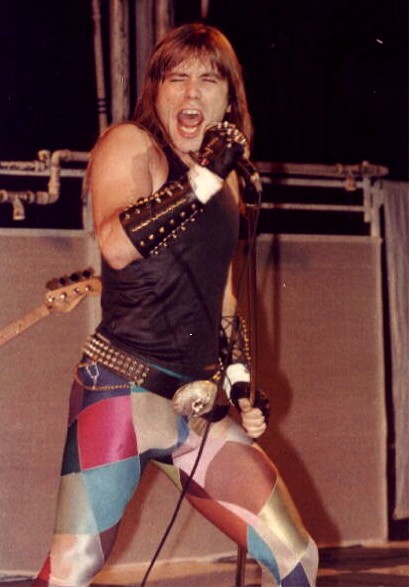
Now from memory rather coffee stained memory I seemed to have gone into their career a little backwards, or sideways or hub-wards. The first song I remember hearing was the phenomenal Aces High, the first album I owned was Live After Death (In cassette form!) but the first studio album I owned was Fear of the Dark. Which I really really liked, but it somehow didn't feel like the Iron Maiden I first knew. So I left it for a little bit. Sometime somewhere someone gave me a VHS copy of Made in England which was filmed during their Seventh Tour of the Seventh Tour. And boy, oh man did those spandex trousers left quite an impression and not in a good way.  But the songs. The songs were so so very very very good. There isn't enough wax for me to wax lyrically or poetically about this album but I shall try my best.

Bruce Dickinson and 80's spandex


Then I got this single given:

Can I Play With Madness

Which had two songs from an album I had not listened to by Iron Maiden. That album? Seventh Son of a Seventh Son. The best and one of the perfect albums of heavy metal. It would not be unfair to say that their creative talents had peaked considerably when they put out this album. That is not to say that all the albums that followed were shit... just not as good. I know there are people now probably shouting at the screen mentioning various names but I would argue that they haven't released a bad album, they've done some awful songs but not whole album full of them.  But Seventh Son of a Seventh Son is just completely different. It is the perfect mixture of Wow! and Woah!

For those who don't know. This was Iron Maiden's seventh studio album, they were at their peak in terms of albums sales and touring relentlessly. They were at the top of their game. These guys had been touring together for 6 years at this point. They had released the rather odd Somewhere in Time, which has their best album cover though, which had featured fairly heavily synthesizers but had not really fully incorporated them. But on this one they completely embraced them and put them to great use.

Apparently Steve Harris had been reading Seventh Son by Orson Scott Card. And with Bruce Dickinson's interest in history and Aleister Crowley in particular it was only a matter of time when this would collide. Them two spoke for a while and then decided to make a concept album about the Seventh Son of a Seventh Son.

The story follows a boy who is the seventh son of the seventh son(Betcha didn't see that one coming). In Moonchild he is being born and there is a fight going on between the Devil and an Angel regarding who's path he will follow. Throughout his life he struggles with his dreams, his visions and generally his life seems to be going down the drain. Fast. He tries, but in the end can't live with the burden. So the album ends on a cheerful note called Only the Good Die Young.

To be honest the concept went right over my head, still does in fact, but the music is impeccable.  As a concept album it is really rather weak, nowhere near like say Operation Mindcrime or Christ.O or Brave. But what it does have a common musical thread running through all of the songs. There are two songs that are blatantly commercial namely Can I Play With Madness and The Evil that Men Do, but they are great. And the former has a video that features Graham Chapman! Apparently the former also started of as a ballad, and listening to it I don't understand how, but the latter could have very easily been a power ballad. But both are equally hard rocking and headbangable.


Then you've got the prog element that has always been there. To be honest regarding long proggy songs the best one they've ever done is The Rime of the Ancient Mariner. But the title song is an atmospheric masterpiece, but it's by no means the only prog song there, the other contender for prog-metal song on here is Infinite Dreams which has one of the most interesting guitar playing and very unusual song structure, considering that most of the time when they write songs they try to make sure that that the audience can sing along. But that is pretty hard with this one. But it's a great song though and you can feel for the character and the psychosis that is plaguing him. It sorts of meanders from being a power ballad to a fully fledged metal song towards the end with those patented Iron Maiden dual guitar attacks that are just so so very wonderful to listen to. 

With all of this you also get Steve Harris galloping bass playing. I've yet to hear anyone else play the bass like he does, it is quite wonderful to listen to especially when he goes off on one like on The Clairvoyant which for a long long time was my favourite song from this album. Not sure which is my favourite song right now because whenever I put this album on I have to listen to it from start to finish. Each song individually is ranging from great to greatness, but listening to them all in sequence from start to finish just adds that oh so extra special layer on top of all of them. Bit like a smear of Mr. Vikki's BBQ sauce does for ham sandwiches.

Bruce Dickinson goes out of his way to show why he is one of the best voices to come from that Heavy Metal Era (Still has one of the best voices in fact) and mesmerises completely throughout and keeps you captivated in the story that isn't all there. He shows why he's called the Air-Raid Siren with gusto and puts his history degree into good use when writing his lyrics.

Dave Murray and Adrian Smith are the dual guitar players that every other guitar pair, it was such a loss when Adrian left. Though that is not a slight on Janick. But thank the Gods that both Bruce and Adrian returned and kept Janick.

The album ends with the same acoustic ditty and sinister words by Bruce Dickinson (Which he borrowed from the aforementioned Aleister Crowley) that it started with:
Seven deadly sins
Seven ways to win
Seven holy paths to hell
And your trip begins
Seven downward slopes
Seven bloodied hopes
Seven are your burning fires
Seven your desires
They still haven't bettered this album, though Dance of Death came pretty close.

So for people's enjoyments I'll share the album in two different formats.

Tuesday, 21 January 2014

Student Nurse Perspective: The Flu Vaccine.


*
1918 Spanish Flu Pandemic
Little intro might be handy for this. This post has been on my mind for a long time now and finally I decide to pull my finger out and actually write it. What is to follow will be a mixture of factual, scientific and anecdotal writings. Because that is the way I roll. I have been itching to write something, anything about vaccinations for a little bit now, but so far decided not to because there are so many out there who do it and do a better job of it then I would dream of, so I'll list some. Skeptical Raptor, Respectful Insolence, Red Wine & Apple Sauce, Just The Vax and many many more.   


Prior to starting my nursing course I was very much into my slightly alternative medicine. I was on the fence regarding vaccines, not just the flu vaccine but all vaccines. Now that I think back on it I'm not really sure why. It was never really something that I thought about properly until I started my university course. What was probably a turning point for me was the amount of patients over 70 I came across who had to use callipers and wheelchairs because they contracted polio when they were kids. I have never come across a patient under 70 who has had polio. Never. This sort of got me thinking about the importance of vaccination, and if there is one thing that I have learned since starting uni is that evidence is the key.


During my time in healthcare as both a support worker and a student nurse I have heard some rather odd statements from people who profess to work in an evidence-based profession.  The information that some of them believe regarding the flu vaccine has been especially astounding and the other factor has been that there is a group set up on Facebook, dedicated entirely to nurses who refuse the vaccine. This group is mainly US based where some states mandate for every healthcare worker should get the seasonal flu vaccine, or else risk losing their jobs or have to wear a mask during the flu season. Quite frankly I would be in favour of seeing a similar thing in the UK. Because the evidence, the real evidence, the researched evidence shows that it is safe.


Just to make it clear, the following blurb are based on what I have heard people say. There is an awful lot of misinformation I have read online, but that deserves to be tackled in a blog entry of its own.


As a future nurse in the UK I will have to abide (Well actually that is not the whole truth, even as a student nurse I have to abide by them) by the NMC Code of Conduct. Which clearly stipulates in the introduction:

"The people in your care must be able to trust you with their health and wellbeing.
To justify that trust, you must
  • make the care of people your first concern, treating them as individuals and respecting their dignity
  • work with others to protect and promote the health and wellbeing of those in your care, their families and carers, and the wider community
  • provide a high standard of practice and care at all times
  • be open and honest, act with integrity and uphold the reputation of your profession"
And in another section regarding providing high standard of care it says:

"35. You must deliver care based on the best available evidence or best practice."
What I have found astounding is that there are so many misinformed (that is me being polite) nurses working with patients. Especially when you consider the clientèle they work with. Health care workers take care of people at their most vulnerable, whether physically or mentally. They work with people who have suppressed immune system, like cancer patients, patients who have had organ transplants, who have immunity disorders like HIV/AIDS, who suffer from COPD, asthmatic, malnourished, children, the elderly, people who have just had surgery and on and on an on. Patients with COPD for example are encouraged to have their flu vaccine for the simple reason that the flu would exacerbate their condition and make them worse. Now the problem here is that the flu vaccine is unfortunately not as effective as most other vaccines. But it does reduce the risk of influenza by 60% in the general population but up to 70-90% in healthy adults, and that is a lot more than 0% protection. With people in nursing/care homes it is up 50-60% effective in preventing hospitalization for example. And that last bit is important because we as nurses (okay a future nurse in my case) quite frankly want to make sure that no one comes to hospital who does not need to be there, especially if it is something that can be prevented in the first place. And this is where Herd Immunity comes in or community immunity as some people like to call it. The current vaccine we have are the best we have got at our disposal, not as good as we would like it to be but still generally better than most people give it credit for.

During my course I have heard some really rather dodgy and odd claims about the flu vaccine. These high stories can be boiled down to three claims. The first one is a variation of "I got the vaccine then I got the flu". Which quite is impossible, this sort of reasoning is called Post Hoc Ergo Propter Hoc. The main reason being that it is impossible is because the influenza vaccine contains an inactivated virus, effectively a dead virus. It cannot come back to life in some sort of magical zombie way. Some people, even nurses, seem to not know the difference between a cold and a flu. Some people seem to think that the influenza is just a stronger version of the common cold. Which is just wrong, oh so very very wrong. The common cold is generally caused by Rhinovirus, whereas the flu is caused by a family of virus called Influenza Virus.  If you get the flu, you know about it. I do remember having it once some years back, completely and utterly destroyed Christmas for me that year, and I do not remember feeling nearly as lousy. Ever. There is a small chance that you could be symptomatic if you get the flu mist, which contains an attenuated virus. But the flumist has been found to be more effective for children whereas the injection works better on adults.

The second claim I have heard is a variation "Well I'm fit and health I don't need to worry about the flu", sometimes followed with "Besides it mainly only kills children and elderly". Anyone who works in healthcare that says the former sentence and adds the latter to it should not be working in health care. At best they should work as  chimney sweeps. Or maybe as car crash dolls. In fact anyone who thinks this way should be disqualified from the human race for shoving. During the Spanish Flu epidemic the biggest number of deaths was in young adults. The flu can be deadly to healthy people. A recent statistical report from CDC, shows for example that:
"Between October 1, 2013 and January 4, 2014, 2,622 laboratory-confirmed influenza-associated hospitalizations were reported. This is a rate of 9.7 per 100,000 population. The most affected age groups are those 0-4 and ≥65 years; however, those aged 18-64 years account for 61% of reported hospitalized cases."
And the Public Health England website had this to say:
"Indicators of influenza activity remain at low levels of intensity with evidence of sporadic detections of influenza. However, increasing influenza positivity and influenza-confirmed hospitalisations in young adults (15-44 year olds) has been reported, with A(H1N1)pdm09 predominating."
And the ECDC in their report added:
"In the majority of countries, the most affected age group as reported from primary care services has been 0–4 year-olds, even though in Belgium, Iceland, Ireland, Malta and Norway, rates of influenza-like illness and acute respiratory infection (ILI/ARI) have been higher among 15–64 year-olds."
Or to quote Orac:
"I don’t care how healthy you are. The flu can kill."
The third claim I have heard and has so far gone down as one of the most stupid claims I have ever heard. "I refuse to have the flu vaccine because many years ago a lot of patients I took care of re-stroked." I am not sure where to begin with this really rather dubious claim. The fact that no one else actually remembers this particular re-stroke season did not really help to support that statement. This goes against all the accrued evidence where it has been shown that people over 65 who got the flu vaccine had a marked risk reduction in major cardiovascular incidents and strokes, which a meta-analysis done by The Journal of the American Medical Association in 2013 rather emphatically showed. This was especially evident in patients who had active coronary disease. There was also a study done by the American Heart Association done in 2003, where it was mentioned of course that further studies were needed in order to establish why the influenza vaccine would have that kind of effect, but as is mentioned in the AHA article:
"Influenza activity has been suggested as an explanation for the winter peak of MI. Glezen and colleagues, in a study in Houston from 1975 to 1977, found the incidence rates of death due to ischemic heart disease, hypertension, and cerebrovascular disease were similar to that of death attributed to influenza and pneumonia, with peaks and troughs that lagged influenza activity by ≈2 weeks. "
But generally, even in healthy older adults(over 65’s) who received the influenza vaccine and/or pneumococcal there was up to 57% reduction in total mortality. So regardless of whether they are healthy or not, it is beneficial for everyone. Bit like having an ace up your sleeve in the battle against the flu.

Contracting the flu on the other hand can lead to
further strokes and heart attacks:
"A total of 20,486 persons with a first myocardial infarction and 19,063 persons with a first stroke who received influenza vaccine were included in the analysis. There was no increase in the risk of myocardial infarction or stroke in the period after influenza, tetanus, or pneumococcal vaccination. However, the risks of both events were substantially higher after a diagnosis of systemic respiratory tract infection..."
Which sort of leads us again to the idea of Herd Immunity. I have already talked about this a little bit earlier in the post, but I suppose it needs to be said again. We as healthcare workers work with people who are at their most vulnerable. Which makes it even more important that nurses take every step to protect them, and that includes getting the annual influenza vaccine. By getting the flu vaccine a health-care worker will reduce incidents of influenza transmission, reduce the risk of hospital-acquired influenza infection, along with other respiratory tract illnesses, hospital admissions from care home to hospital,  reduce staff sickness and it saves hospital trusts money. After all the flu does not just kill it also maims. It can lead to pneumonia, bronchitis, endocarditis, myositis and other life-limiting complications.

We as nurses are there to take care of the patient. That might be pointing out the obvious, but sometimes it seems that people often forget the obvious. Taking care of our patient and making sure that they are safe
from harm and to prevent harm from happening, that is our priority. And if that means to suffer a slight discomfort around the injection area. Then so be it. As professionals then we should not believe the misinformation and use anecdotes to back them up. We should be working with the evidence. And the evidence for flu vaccines for healthcare workers is clear. It is worth it for us and for our patients. Even until a better vaccine is developed every one who is involved in the care of patients should be vaccinated with the vaccine that is currently in use. 60% protection is better than 0% protection.
I will finish this with a small section from the American Nurses Association Code of Ethics which puts this rather neatly and to the point:
"The nursing profession is committed to promoting the health, welfare, and safety of all people."