Showing posts with label Stroke. Show all posts

Wednesday, 1 February 2017

Metal Nurse: Physical health within mental health

One of the many healthcare areas that hold great interest to me is mental health. Prior to starting my nurse training I had worked in secure services mental health for 6 years. It was an eye opener. It was essentially what lead me to doing my general health training as opposed to mental health training. This article should tie with my previous article on self harm. The focus here is of course on how patients physical health should also be the focus within a mental health setting. What was often not always noted is that physical health problems can manifest as mental health issues. For example infections can and do lead to delirium, especially Urinary Tract Infections. Even constipation will cause confusion and mood swings.

Quitting Smoking
My main interest at the time though was the physical well being for those patients. The lack of physical health care for patients in long term mental health institutes has been recognised for a long time. Patients with schizophrenia are for example known to die from natural causes sooner than the general public. Hence the need for mental health nurses to be trained better in order to recognise and tackle physical health issues. The most common causes for the mortality rates are smoking and obesity.

The rates of smoking are two to three times more common within patients who have schizophrenia than the general public, two out of every five cigarettes are smoked by people who suffer from mental health problems. And people who have bipolar disorder have also been known to be 2 to 3 times more likely to smoke. Not only that but those with mental health problems smoke more than the general public that smoke. So the dangers of smoking are enhanced and the importance of smoking cessation becomes even more important.  The dangers of smoking cannot be over stressed, and the benefits of quitting smoking cannot be underlined often enough. According to a systematic review by the BMJ, quitting smoking has not only physical health benefits but also mental health benefits. And that's across the board. Or as the meta-analysis says itself: 
"Both psychological quality of life and positive affect significantly increased between baseline and follow-up in quitters compared with continuing smokers.  
There was no evidence that the effect size differed between the general population and populations with physical or psychiatric disorders. " 
Essentially. Anxiety went down, depression went down and stress all significantly decreased AFTER quitting smoking. Which all in all just says to me that mental health care facilities should place a stronger focus on smoking cessation then they already do. What should also be added is that if you are on medication for your psychiatric issues, you take less medication if you quit smoking. The reason being is that smoking increases the body's metabolism of most of those drugs. This is especially apparent in those who take clozapine. For example when the smoking ban came into effect within UK's mental health facilities the plasma serum levels went up, because of patients reduced smoking. But that often wasn't accounted for when considering the patients medication dosages.

Quitting smoking isn't easy, I know that from personal experience, and in I would imagine that those who already have diagnosed mental health problems will find it more difficult hence the need for more robust support during the smoking cessation. Which also just brings the point that nurses should also work as role models in terms of their health promotion. Seeing as there are so many nurses that still smoke. It is pretty difficult to provide good support if you aren't willing to seek out support for it yourself. We also have to smash the preconception that drinking coffee and smoking cigarette first thing in the morning is something that is okay, and think that it is a safe and effective way of getting someone to calm down when they are having a psychological breakdown. Verbal de-escalation works a lot better then the offer of a cigarette and a cup of coffee.
Learn How To Become...
As mention previously obesity is the other big(no pun intended) issue for mental health patients. It is well known that certain psychiatric medication induce weight gain and in longer term morbid obesity. Obesity leads to several physical health related issues as well as mental health. This would include,  Type 2 Diabetes Mellitus, Stroke, Coronary Heart Diseases, Infertility, Loss of Bladder Control, and many many more.

Regarding T2DM, it becomes a big issue within a hospital setting as often the health care staff looking after patients with diabetes sometimes mistake hypoglycaemic episodes with delirium or psychological breakdown, hence delay of proper treatment. With patients who suffer from schizophrenia they also often suffer from defective glucose tolerance and insulin resistance. Which makes recognising diabetic crisis hard to tell from psychological crisis, for those who are not appropriately trained.

Then there the psychological issues. Being obese can lead to depression, anxiety, body dysmorphia, low self esteem, and many more. Of course if you already do have those issues being obese will exacerbate those issues.

Since weight gain is a very common side effect of psychiatric medication, and well known by mental health care professionals,  I do wonder why rolling out weight management plans alongside starting the drugs isn't done. Because losing weight is not an impossibility like a lot of professionals seem to believe.

 The medications will increase their appetite, but that is not the only reason for it. Whilst in a secure setting patients become more idle, and their diet intake tends to be very poor. I remember watching patients eating increbile amounts of takeaway foods, sweets and gulped vast quantities of soft drinks. But on the flip side I don't remember an awful lot of healthy food stuff being promoted, like the 5 a day fruit and veg intake.Or just the whole Change4Life campaign. Or drink to water. Or even Meat Free Monday's.

In a large study published by NJEM, it was shown that with the right plan and the right intervention, patients with serious mental health problems could lose weight and not just that but keep their weight down following lessening of weight loss sessions. Even with obstructions like hospital attendence's, breakdown in mental health and so forth. Of course like with smoking, it is sometimes hard for nurses to be role models for life style changes when they also feel like they can't tackle the subject due to their own life style.

All in all, what I personally would like to see more of is further physical health training for mental health nurses, and of course vice versa for general nurses. Because all training for either will only improve both professionals healthcare practice.

Wednesday, 21 January 2015

Student Nurse Perspective: Stroke Care


Seeing as my first job as a qualified nurse is going to be on a stroke unit. I thought for my own sake that I write a little about strokes. With that I thought I'd tie in with a little bit of information about thrombolysis. Mostly I am writing this as a refresher for myself and at the moment this looks like to be my last Student Nurse Perspective article. Due to be renamed Icelandic Metal Nurse. But I do hope that it will be useful for others as well, I will try my best to write it in such a way that everyone can read it and understand it (well, hopefully).

Haemorrhagic Stroke
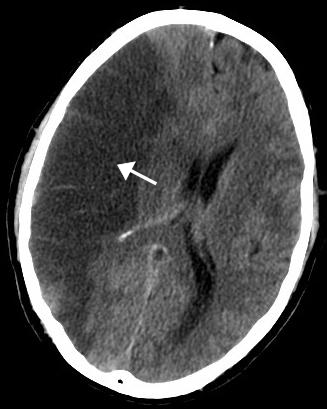
Stroke (Apparently called Brain Attack in the US) is the common name for Cerebrovascular Accident (CVA). Every year around 100,000 strokes occur in the UK. It mostly occurs in people who are over 65. But it can affect everyone. It is a very debilitating condition and depending on which area of the brain it happens the symptoms vary. Mostly the effects are irreversible. Symptoms vary between what part of the brain is affected, and the larger the stroke the more areas of cognitive ability it will affect. Stroke accounts for over 46,000 deaths per year making it the third largest cause of deaths in the UK and it is the most common cause of adult disability.  There are big financial implications for society as a whole, total costs to the NHS is over £4.4 billion per year and to society due to lost income and informal care it is £9 billion.

Survival rates from a stroke is currently 20-30% after one month and 30-40% after one year, but those numbers do not mean a lot to the individual. Generally in terms of better prognosis is based on severity of the stroke, age of the patient, what type of stroke, ethnicity and co-morbidities. Physical recovery is based on how much function the patient has in terms of activities of daily living and it usually reaches it's peak six months post stroke.  Whilst we have come a long way in treating acute strokes and hospital rehabilitation for stroke patients, we have not progressed very well in terms of long term management and community based treatment for stroke patients who suffer from some of the more long term affects of strokes like psychological and social problems.

Ischaemic Stroke
Strokes fall into two categories, ischaemic strokes and haemorrhagic strokes. Ischaemic strokes accounts for 85-90% of all strokes. Ischaemic stroke occurs when there is a blood clot occluding any blood flow to a portion of the brain. Haemorrhagic stroke is when an artery in the brain has burst and blood leaks into the brain tissue. Haemorrhagic stroke can also be further divided into Intracerebral haemorrhage (bleeding in the brain tissue) and subarachnoid haemorrhage (bleeding on the surface of the brain). There are also some conditions that are sometimes known as stroke mimics, for example hypoglycaemia, epileptic seizures, severe migraine attack, encephalopathy and Transient Ischaemic Attacks. There are certain lifestyle factors that increase your risk of having a stroke such as smoking, alcohol consumption, poor diet, lack of exercise, obesity and drug use. There are also certain medical conditions that will raise that risk such as  high cholesterol, high blood pressure, atherosclerosis, diabetes and atrial fibrillation.
  • There are of course plenty of actions you can take to reduce your risk of getting a stroke. If you are a smoker then there is nothing better you could do than to quit smoking. I mean seriously. Just stop. Now. That stuff is bad for you.
  • Reduce your alcohol consumption. Those cans/wine glasses add up, especially when you are pairing gluten free German beer with French wine as smorgaswine.
  • Lay of those drugs. Or at least reduce your usage drastically. Please.
  • Pick up regular exercise. It doesn't have to be anything major. Just get of that sofa and go for a nice brisk 30-45 minute walk every day. Get a dog or failing that get a ferret.
  • Increase your intake of fruit and vegetables. The importance of a good diet cannot be underestimated. Sure go for the occasional fast food, but don't forget to include some salad with it.
  • Lose some weight. No I am not saying that you have to look like a sculptured Greek god/dess. I am saying that that apron you have around your waist needs to go.
  • If you're diabetic make sure that you keep your blood sugar ticking between 4-10 mmol/l. Fluctuating blood sugar can be a little disastrous. 

F.A.S.T.
Thankfully due to the excellent FAST campaign most people know what signs to look out for if someone is having a stroke. But I'll go over it briefly again just to recap. When stroke begins the symptoms are pretty quick to show, first thing to notice will be if the face is drooping to one side (can they smile), if they can raise both arms and keep them raised for say 10 seconds or so and if their speech is slurred. Time is of essence here so if you suspect that a loved one is having a stroke phone the emergency services as soon as possible (999, 112 or 911, depending on your location). While there are lots more signs and symptoms those are the ones you should look out for. Symptoms also vary depending on where the damage is happening in the brain, if the symptoms are visible on the right side of the body then the left side of the brain is affected and vice versa.

Carotid Artery
If you've been found to be in a particular risk group then your doctor might decide to put you on some medications in order to reduce that risk. This is mostly medication based using drugs like statins, these are used to control and lower your cholesterol. Anti-platelet, such as aspirin or clopidogrel, are also per standard. These work by inhibiting platelets forming clots. Quite possibly the most important one, or possibly the most well known, you will also be prescribed a tablet from the anti-coagulation group, most likely Warfarin. Like the anti-platelets these work by reducing clot forming usually by inhibiting vitamin k production. As far as side effects are concerned there is the risk of bleeding. If you were diagnosed with high blood pressure you would also be put on either beta blockers or ACE inhibitors.  All of these drugs would also be used as a secondary prevention. If you had suffered from Transient Ischaemic Attacks your doctor might suggest that you have what is called Carotid Endarterectomy, this procedure is used to remove plaque from the carotid arteries. If this procedure is done in a timely manner post TIA's then lives can be saved and strokes averted. Not only that it is also sometimes a suggested operation to prevent another stroke from occurring and again time is of the essence. The sooner this operation is done the better outcome there is for the patient.

Recombinant Tissue
Plasminogen Activator
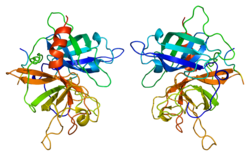
If ischaemic stroke is caught soon enough and time of onset is known then this type of stroke can be partially reversed or at least contained using a medical treatment called Thrombolysis. The alternative name for it is Alteplase and this is made from recombinant tissue plasminogen activator. It is biotechnology at its finest. This treatment is a bit of a controversial one, mainly due to the perceived ineffectiveness, the risk and the price.  About 1 in 7 actually benefits from it and there is the danger that it might turn an ischaemic stroke into a haemorrhagic one. In order to qualify for the procedure you have to have a CT/MRI scan to confirm what kind of stroke you have had. The time of onset has to be known and has to be within 4 hours, though the treatment is said to work better if it is within 3 hours. And the patient has to be weighed. If it has gone over 4 and half hours then you are in danger of damaging the brain even further. When it is effective then it is very effective, a study found that after three months from treatment around 30% of patients were back to normal or at least near normal neurologically and a further 30% had mild to moderate neurological deficit. Up to 50% had become independent in activities of daily living and 15% were moderately independent. But on the other side of things it also found that it up to 9% of patients who had received this treatment had died due to intracranial haemorrhage.

So in conclusion. Regarding strokes time, is of the essence so if you suspect that a loved one (or a stranger for that matter) is having a stroke get your phone out. Don't waste your time taking pictures, and phone for the emergency services. But it isn't just important to get them into the hospital for treatment it is also important to make sure that they end up in a specialist stroke unit as their chances of recovery are much better on there than on a general medical ward. The multi-disciplinary team on there should be made up from (besides nurses) Occupational Therapists, physiotherapists, Clinical Stroke Specialist Nurse, medical consultant and a registrar. Ideally after the hospital stay there should be an outreach team to assist with activities of daily living and further rehabilitation.